A hut between holes is not a shop on a pavement. Rain hits the stock, the hours are short, and the ground under the customer’s feet is often mud. Treat those three facts before you copy a town-centre routine.
Write down the weather on the goods, the hours a person is actually there, and what the standing pad is made of. Confirm the cooler, the card reader and any sales total from the club’s own equipment list.

What tends to fail first:
- Uncovered bottles and snacks in sun or rain.
- A pad of soil or wet timber where people queue.
- A locked hatch during the hours golfers actually pass.
- No named person for a spoiled product or a machine that will not take money.
The Health and Safety Executive slips index, accessed 14 October 2026, is the reference for why people slip and how workplaces prevent it. Use it for the pad underfoot: https://www.hse.gov.uk/slips/index.htm
The photograph shows an empty wooden deck and a bench among trees.
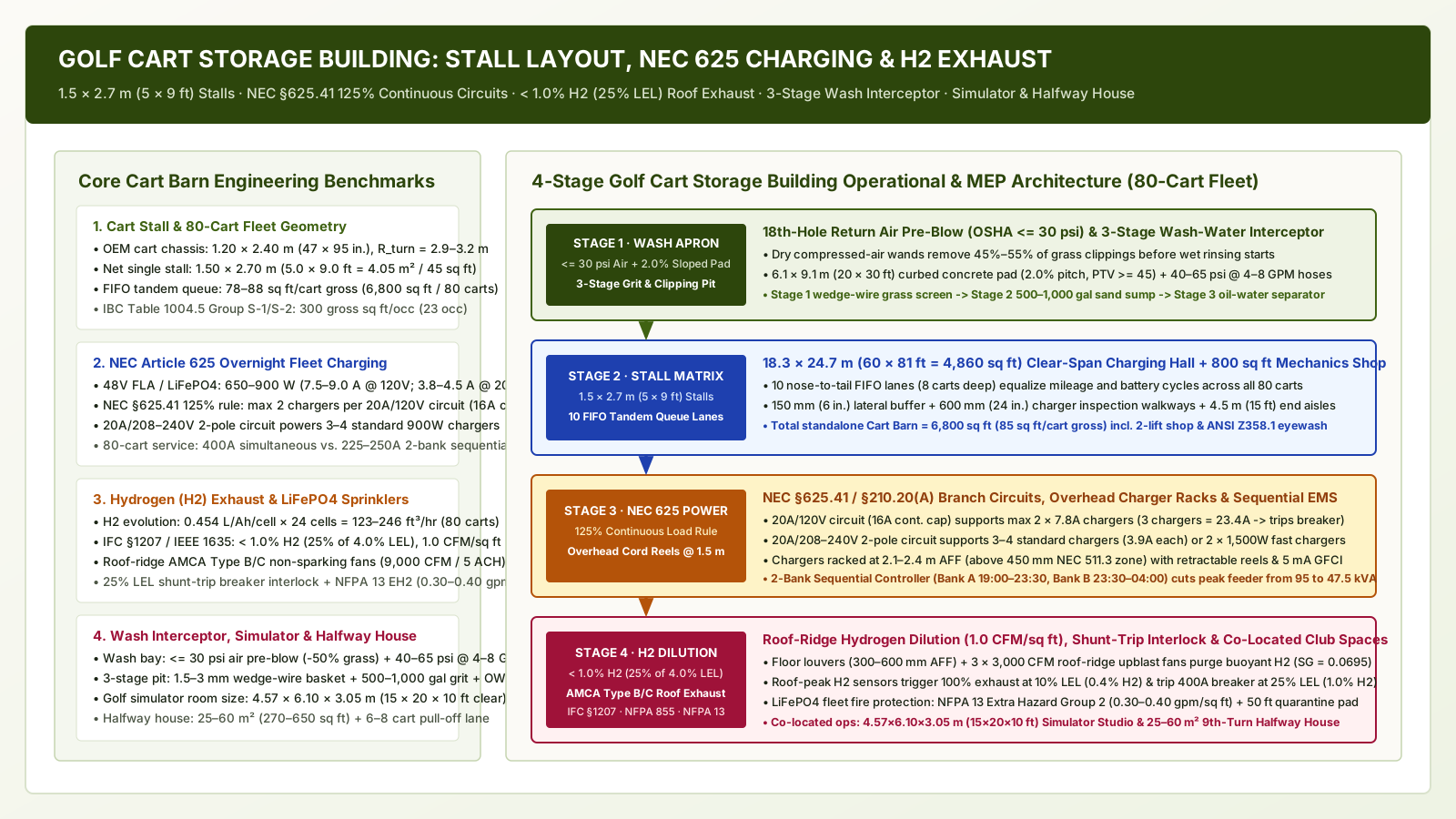
Guest movement nearer the clubhouse, rather than out on the holes, is moving people on event day. When the 9th-hole turn counter is integrated into the main clubhouse building alongside the pro shop and 19th-hole bar, see golf clubhouse design and member-visitor flow. For permanent 9th-turn golf course halfway house dimensions (25 to 60 m²), drained concrete queue aprons, 6-to-8-cart pull-off staging lanes, and fleet cart barn charging and ventilation, see golf cart storage building design, fleet charging, and halfway house layout. The parent is club operations.
Stand at the hatch at the time golfers usually pass and see whether the pad is still the surface you wrote down. If the pad has become mud, the goods list is secondary until the footing is sorted.
Method and sources
Original failure list. HSE slips index, accessed 14 October 2026. Updated October 2026.